How to Dry Sneakers Fast: 5 Safe Methods (No Yellowing)
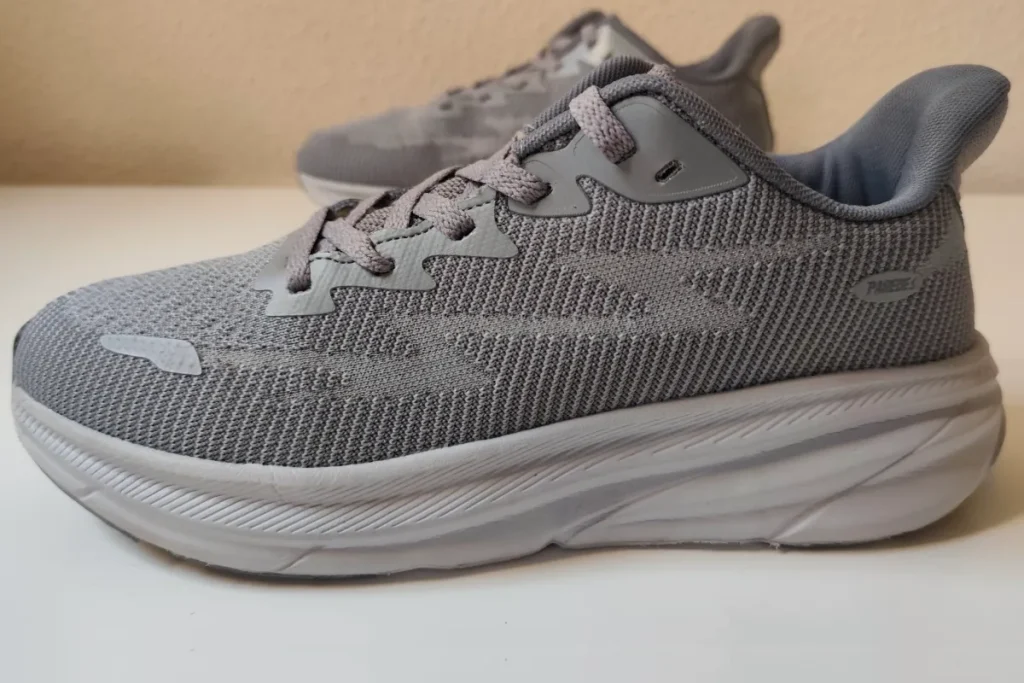
Knowing how to dry sneakers fast is not just about convenience — drying them wrong is the most common cause of permanent sneaker damage. Heat causes sole yellowing, adhesive failure, and fabric shrinkage. Leaving them too long without airflow causes mildew that never fully goes away. Before you even get to the drying stage, make sure you’ve followed the essential [Sneaker Washing Prep].
This guide covers every drying method from fastest to slowest, explains exactly why certain approaches damage shoes, and settles the question of whether you can ever safely use a tumble dryer.
Contents
The Golden Rule: Never Use Direct Heat
Before getting into methods, the single most important rule: never expose sneakers to direct or intense heat.
This means avoid:
- Tumble dryers on a standard or high heat setting
- Placing shoes directly on or against a radiator
- Leaving shoes in direct sunlight for extended periods
- Using a hair dryer on a hot setting held close to the shoe
Why heat causes permanent damage:
The foam compounds used in most modern midsoles — EVA, Boost, React, and similar materials — contain chemical agents that react when exposed to heat and UV light simultaneously. This reaction produces a yellow or brown discolouration that is chemical in nature, not just surface dirt. It cannot be scrubbed off. Once it happens, it is permanent.
Heat also softens and breaks down the adhesive bonds between the upper and outsole. The shoe may look fine after one hot-dry session, but the bond is weakened, and the sole will peel earlier than it should.
Method 1 — The Newspaper Method (Fastest Without Equipment)
Time to dry: 8–12 hours
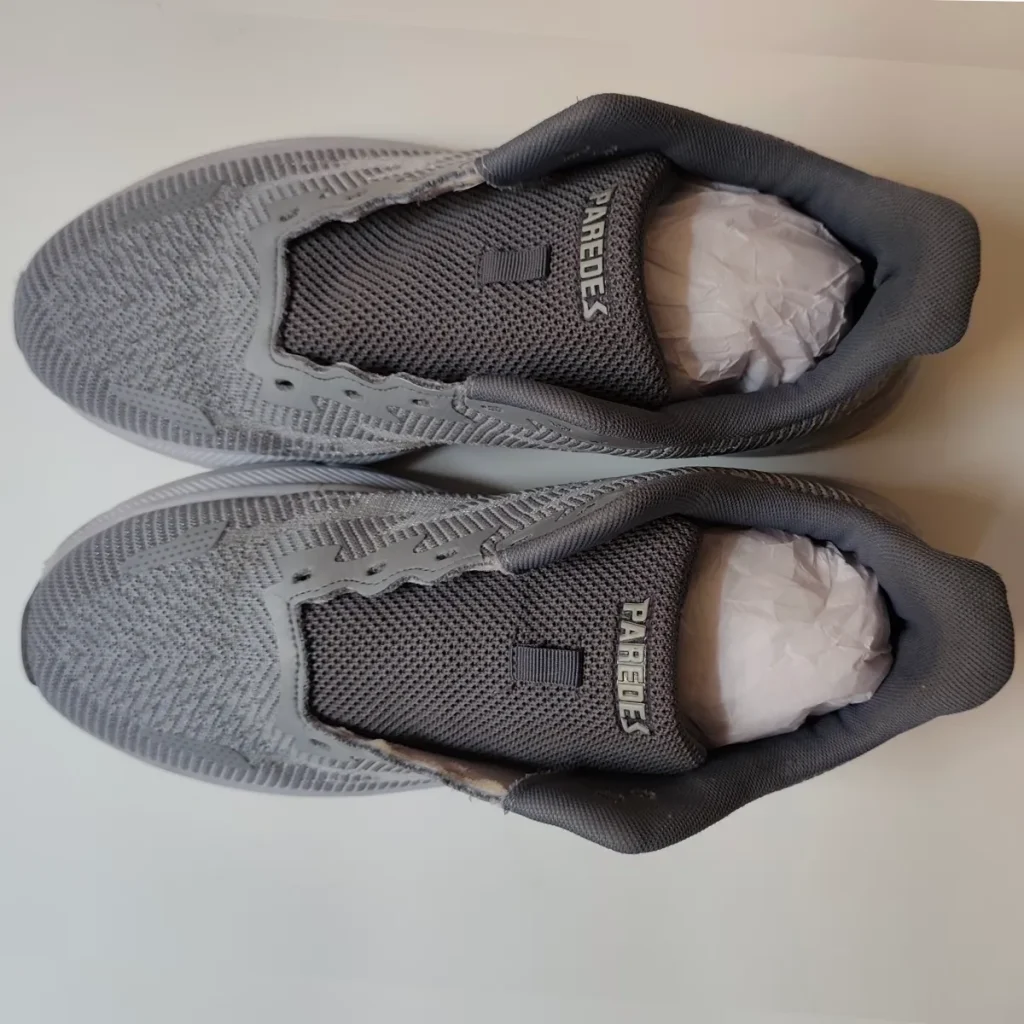
This is the single best no-equipment drying method. Newspaper absorbs moisture from inside the shoe rapidly and helps the shoe maintain its shape as it dries.
How to do it: Scrunch several full sheets of newspaper into loose balls. Pack them firmly into each shoe — the toe box, the heel, and as much of the midfoot as you can reach. The newspaper should be packed tightly enough that the shoe holds its shape, but not so hard that it stretches the upper.
Replace the newspaper every 2–3 hours as it becomes damp. Two or three changes are usually enough for a shoe that has been through a machine wash cycle.
Place the shoes upright or on their side in a well-ventilated area — near an open window, in a room with a fan running, or outdoors in the shade on a dry day.
What if you do not have newspaper? Paper towels work as a direct substitute, though they absorb slightly less moisture per sheet. Use more of them and replace more frequently.
Method 2 — Fan Drying: The Fastest Way to Dry Sneakers Fast
Time to dry: 4–8 hours
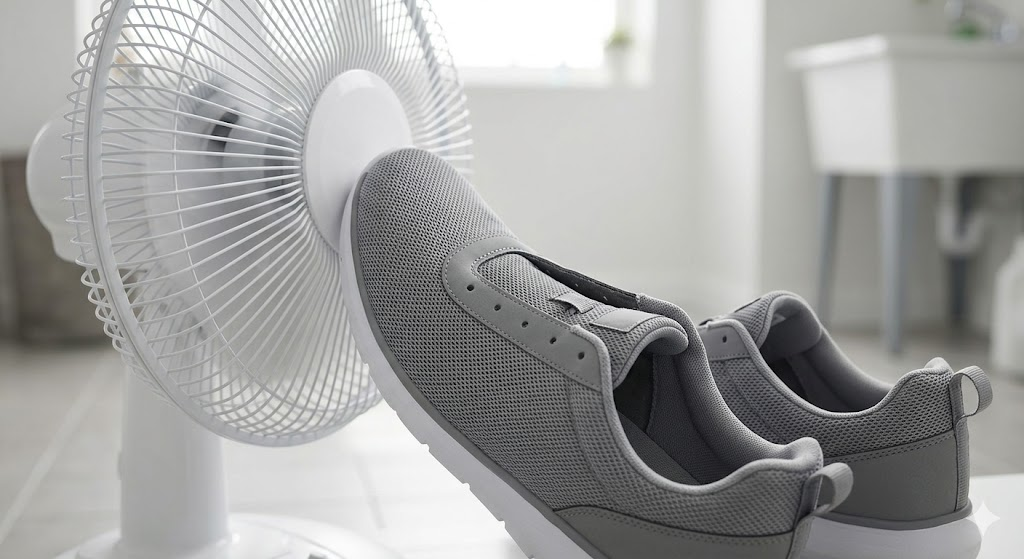
Moving air is the most effective drying agent for shoes. A standard desk fan or box fan positioned to blow directly into the toe box of each shoe can reduce drying time by 50% compared to still-air drying.
Setup: Remove laces and insoles (already done if following the prep guide). Prop each shoe upright facing the fan so the toe opening is directly in the airflow. Position the fan 20–30cm / 8–12 inches from the shoes. Run on medium speed — high speed is not necessary and can cause the outer fabric to dry unevenly.
You can combine this with the newspaper method — pack the shoes with newspaper and position them in front of a fan for maximum effectiveness.
Method 3 — Cedar Shoe Trees
Time to dry: 12–18 hours (slower, but best for shoe shape)
Cedar shoe trees serve two purposes: they absorb moisture from the inside of the shoe, and they hold the shape of the shoe perfectly while it dries, preventing creasing or misshaping of the upper.
Cedar is a naturally moisture-absorbent and antimicrobial wood — it pulls water out of the shoe and also helps suppress the bacterial growth that causes odour. For shoes you care about keeping in good condition long-term, cedar shoe trees are worth the investment.
This method is slower than fan drying but produces the best final result for premium shoes or shoes you want to maintain carefully.
Method 4 — Silica Gel Packets
Time to dry: 10–16 hours (best for completely soaked shoes)
The white packets labelled “Do Not Eat” that come in shoe boxes are silica gel — a highly efficient desiccant. If you have accumulated several of these, placing 4–6 packets inside each wet shoe significantly accelerates drying.
For heavily soaked shoes — shoes caught in rain, not just machine-washed — silica gel combined with the newspaper method is the most effective approach. Line the inside of the shoe with paper towels to absorb surface moisture, then place silica packets in the toe and heel areas.
Silica gel packets can be reused indefinitely — after they have absorbed moisture, spread them on a baking tray and place in a standard oven at 80–100°C / 175–215°F for 1–2 hours. This drives the moisture out and reactivates them.
Method 5 — How to Dry Sneakers Overnight (Standard Approach)
Time to dry: 18–24 hours
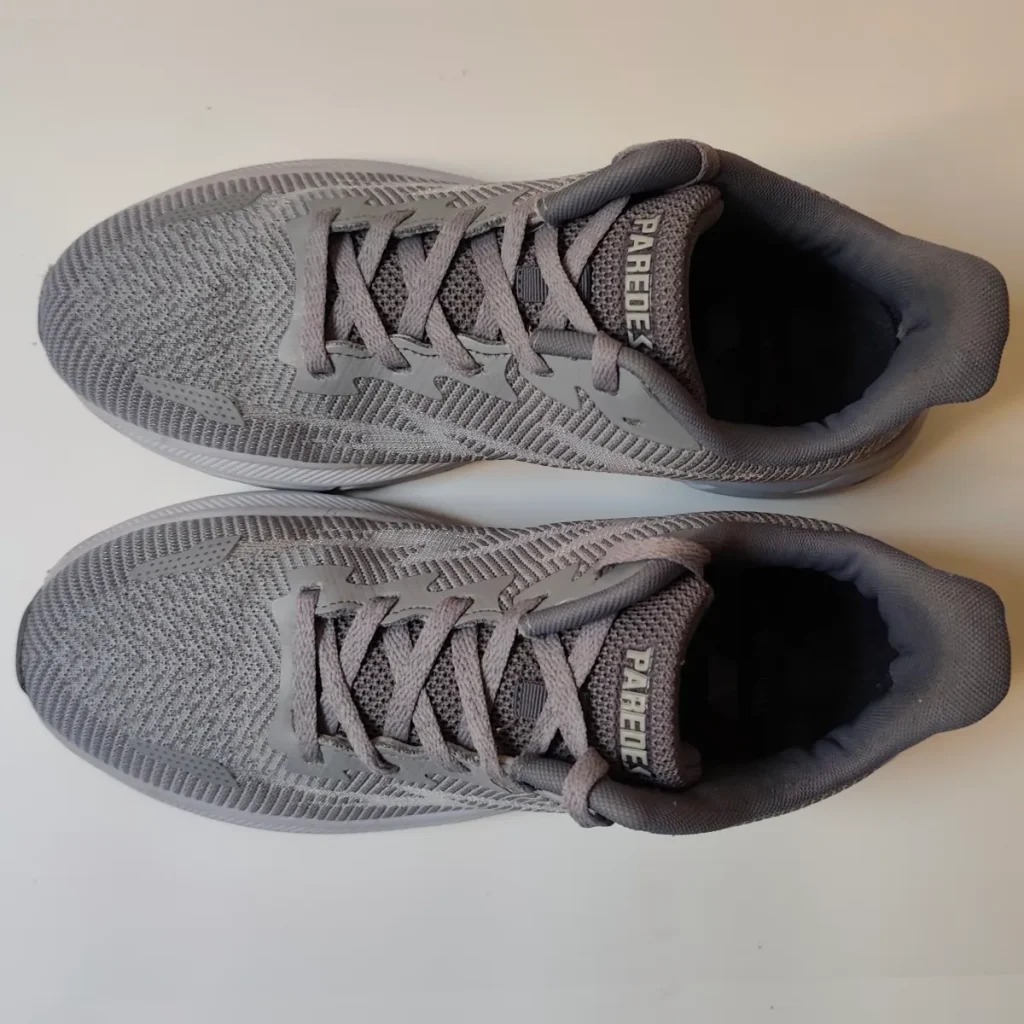
For most situations — a machine-washed shoe in normal room conditions — the simplest approach is to stuff the shoes with newspaper, prop them upright on a towel or shoe rack in a ventilated room, and leave overnight. Most fabric and mesh shoes will be ready to wear the next morning.
Do not leave shoes drying in a closed room with no airflow, a bathroom with residual shower humidity, or a cupboard. All of these slow drying significantly and encourage mildew growth.
The crease test: Before putting shoes back on, press the insole area with your fingers. If any area feels cool or damp, it is not dry. A shoe that feels dry from the outside may still have moisture in the foam cushioning. Give it additional time.
Can You Use a Tumble Dryer?
This is the most frequently asked drying question, and the answer is nuanced.
Standard tumble dry on heat: No. The heat setting on a standard dryer cycle — typically 60–75°C / 140–165°F — will yellow midsoles, shrink fabric uppers, and degrade adhesive bonds. Do not use this.
Air-only / no-heat tumble cycle: Conditionally yes. If your dryer has an air-only or “air fluff” setting that uses no heat, this is safe for most fabric and mesh shoes. The tumbling action with dryer balls or a clean towel provides airflow that speeds up drying without thermal damage.
If using a tumble dryer on air-only:
- Use the no-heat / air-fluff setting only — confirm this on your dryer’s settings panel
- Tie the laces together and loop them over the dryer door before closing — this suspends the shoes near the door opening and significantly reduces banging
- Add 2–3 dryer balls or a dry towel to cushion the load
- Run for 30–40 minutes maximum, check, and air dry for the remainder if still damp
- Never use for leather, suede, or any shoe with glued embellishments
Can You Dry Sneakers in a Dishwasher?
No. This question comes up more than you might expect, so it deserves a direct answer.
A dishwasher runs at 60–75°C / 140–165°F at the cleaning cycle and uses high-pressure water jets that are far more aggressive than a washing machine. It will yellow midsoles, degrade adhesive, and potentially warp the shoe structure. The steam from the drying cycle is additional heat exposure on top of the wash. Do not put shoes in a dishwasher for cleaning or drying.
Drying Time by Shoe Type
| Shoe type | Expected drying time (air drying, room temperature) |
|---|---|
| Mesh running shoes | 8–14 hours |
| Canvas sneakers (e.g., Converse) | 12–20 hours |
| Knit/Flyknit uppers | 10–16 hours |
| Thick foam cushioning (e.g., Hoka, Brooks) | 18–28 hours |
| Leather sneakers (hand-washed, not soaked) | 24–48 hours |
| Heavily soaked shoes (rain, puddle) | 24–36 hours |
These are estimates at typical room temperature (18–22°C / 64–72°F) with basic ventilation. Fan drying cuts these times roughly in half.
How to Dry Specific Brands
How to dry Air Force 1s
Air Force 1s have a leather or leather-like upper. Do not use a tumble dryer. Stuff firmly with newspaper, air dry at room temperature away from sunlight. The rubber cupsole is thick and retains moisture longer than the upper — expect 18–24 hours. Do not force dry with heat.
How to dry Yeezys and Ultraboost
The Boost foam midsole in Yeezys and Adidas Ultraboost is heat-sensitive. Never tumble dry. Air dry only. Boost foam can deform slightly if compressed while wet — do not stack anything on the shoes while they dry. Expect 16–20 hours.
How to dry Converse
Canvas Converse dry relatively quickly — 12–16 hours with newspaper stuffing. The rubber toe cap and cupsole hold moisture longer than the canvas. Press the rubber with your finger before wearing — if it feels cool, it is still damp inside.
How to dry leather shoes and trainers
Leather requires slow, patient drying. Never use heat. Stuff firmly with newspaper to maintain shape, replace every few hours. Once dry to the touch, apply a leather conditioner — leather dries out during extended water exposure and conditioner restores flexibility. Expect 24–48 hours minimum.
How to dry suede shoes
Suede requires specific handling. Pat off excess water gently with a clean cloth — do not rub. Stuff lightly with newspaper to hold shape. Once nearly dry, use a suede brush to restore the nap by brushing in one direction. Expect 24–36 hours and never rush with heat.
Preventing Sole Yellowing — The Complete Picture
Sole yellowing is a chemical reaction called “oxidisation” that affects the EVA and other foam compounds used in most white or light-coloured midsoles. It is triggered by heat, UV light, and air exposure over time.
To prevent it: Dry indoors, away from direct sunlight. Never use heat. Once clean and dry, store shoes away from UV exposure — a shoe box or a bag is better than an open shelf near a window.
If yellowing has already occurred: A mixture of hydrogen peroxide and baking soda applied as a paste to the midsole rubber, then left in indirect sunlight for 1–3 hours, can reduce mild yellowing. This is a slow UV-reversal reaction. Results vary by shoe. It works on rubber and hard plastic midsoles, not on fabric upper areas. Repeat the process 2–3 times for stubborn yellowing.
FAQ
How do to dry sneakers fast without a dryer? The fastest method without a dryer is fan drying — a desk fan blowing directly into the shoe opening will dry most fabric sneakers in 4–8 hours. Combine with newspaper stuffing for maximum effectiveness.
How do you dry sneakers overnight? Stuff with newspaper, replace once after a few hours, and place in a well-ventilated area. Most fabric and mesh sneakers are dry within 12–18 hours with this method.
Can you dry trainers in a tumble dryer? Only on a no-heat / air-fluff setting. Standard tumble dry heat will yellow midsoles and damage adhesive. If your dryer has an air-only mode, run the shoes for 30–40 minutes then finish with air drying.
Why do white shoes turn yellow when drying? The foam compounds in white midsoles react chemically with heat and UV light. This is an oxidisation process. It is permanent and cannot be scrubbed off. The prevention is always air drying away from direct heat and sunlight.
How long does it take for sneakers to air dry? Most fabric and mesh sneakers dry in 8–18 hours at room temperature with basic ventilation and newspaper stuffing. Heavily padded shoes or shoes soaked through may take 24 hours or more.
Can you dry sneakers with a hair dryer? Use a hair dryer only on the coldest setting, held at least 20–30cm away, and keep it moving — never concentrate on one spot. Even “cool” settings can generate enough heat close to the shoe to cause yellowing. Fan drying is safer and equally fast.